

AI-assisted diagnostics move from pilots to accountable clinical practice in South Africa
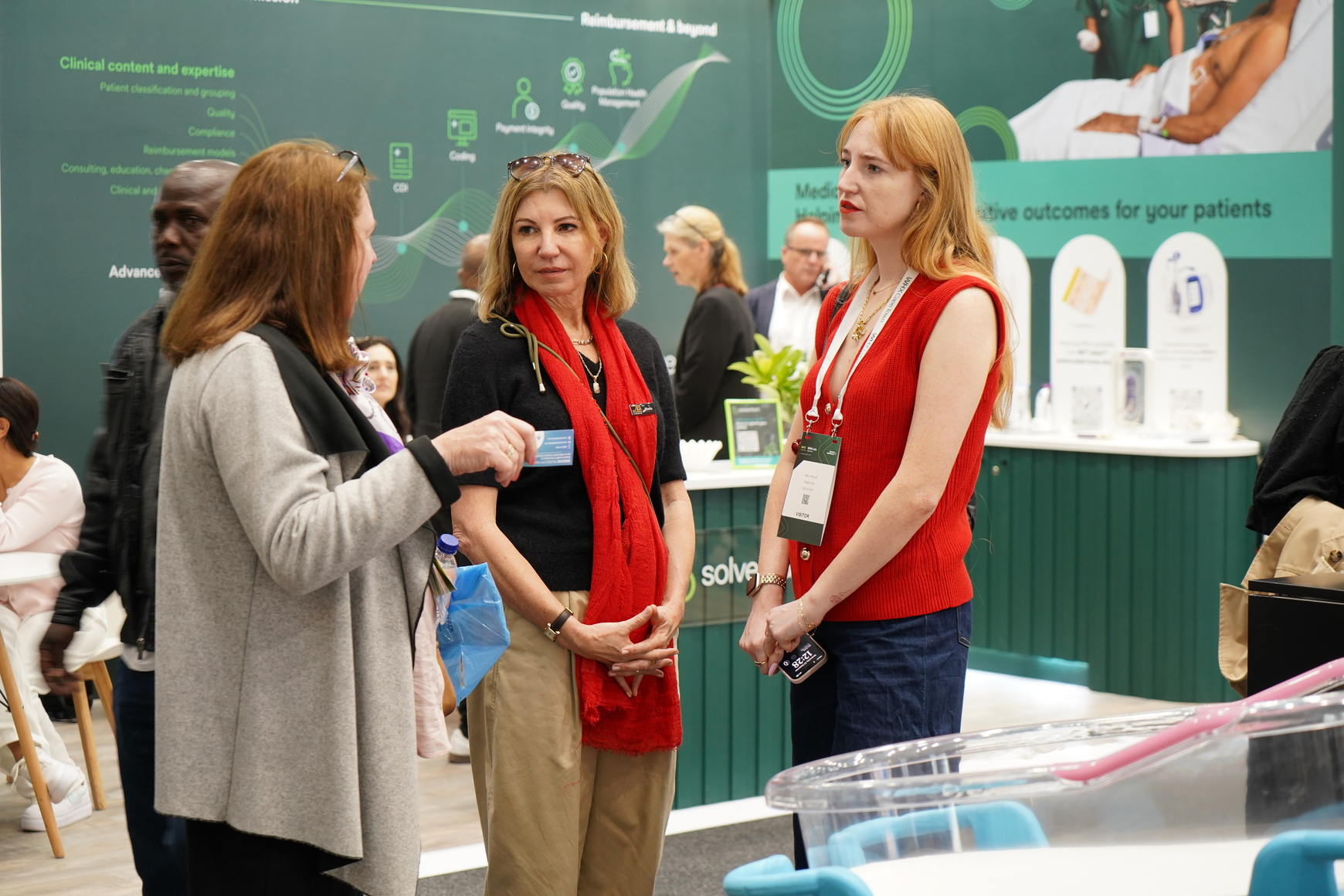
As AI gains commercial traction, robust evidence, local validation and regulatory readiness will determine which technologies achieve routine adoption
AI and related innovations offer significant opportunities to improve health in Africa and globally, but their adoption must maximise benefits while preventing avoidable harm.”
JOHANNESBURG, SOUTH AFRICA, September 9, 2026 /EINPresswire.com/ -- South African healthcare is transitioning to a more predictive, data-driven model of care, underpinned by AI-assisted diagnostics, interoperable digital patient records and connected medical devices. However, the shift from reactive treatment to earlier intervention cannot be determined by technology alone. It will depend on digital tools that can demonstrate clinical value, integrate safely into care pathways and meet the regulatory requirements governing their use.— Prof Edward Kunonga, Chair of the Healthcare Excellence Indaba
AI-enabled diagnostic tools have gained attention for their potential to facilitate earlier detection, enhance workflow efficiency, and expand specialist capacity in fields such as radiology, pathology and laboratory medicine. Yet, a successful pilot alone does not signify a products readiness for routine clinical use. Healthcare organisations ’must assess system performance in real-world settings, across representative patient populations, alongside existing equipment and within the workflows of clinicians responsible for patient care.
This is especially important for diagnostic applications. While an algorithm’s reported accuracy may be important, it does not address every clinical consideration. Health systems must also evaluate false-positive and false-negative rates, consistency of results across patient groups and facilities, clinicians’ ability to identify or contest erroneous outputs, and the implications of algorithm updates or exposure to unfamiliar data.
The commercial opportunity is now becoming more tangible. South Africa’s connected healthcare ecosystem, valued at an estimated US$47 million in 2025, is expected to grow to US$77.4 million by 2033, according to Grand View Research’s Horizon Databook . This trajectory indicates that connected care is evolving from early-stage innovation into an established commercial market.
This also raises more immediate compliance questions. The South African Health Products Regulatory Authority (SAHPRA) has confirmed that AI and machine-learning-enabled medical devices, including standalone software and software integrated into hardware, are subject to South Africa’s medical-device regulatory framework. Suppliers must identify the correct regulatory pathway and obtain required authorisation before placing qualifying devices on the market or making them available for use in South Africa.
For health systems, procurement due diligence must extend beyond a supplier’s technical assertations. Decision-makers need clarity on the technology’s intended use, risk classification, clinical evidence, local relevance, known limitations, data governance safeguards, cybersecurity measures and arrangements for monitoring performance after deployment.
These issues will take centre stage at World Health Expo (WHX) 2026 in Johannesburg - formerly Africa Health - taking place at Gallagher Convention Centre from 6–8 October. Returning to Johannesburg following two editions in Cape Town, WHX brings together healthcare providers, laboratory and diagnostic professionals, technology suppliers, policymakers, investors, distributors and regulatory stakeholders from across South Africa, the Southern African Development Community (SADC) region, and international markets.
In addition to its exhibition, WHX will host three specialist Indabas addressing the operational, clinical and commercial issues shaping African healthcare. The Healthcare Excellence Indaba, taking place on 6 October, will provide a forum for senior healthcare leaders and decision-makers to explore strategies for building resilient, future-ready health systems. The programme will cover the modernisation of hospital infrastructure, global health priorities, ethical governance in decision-making and how digital transformation - including the responsible adoption of data-driven technologies - can support the development of smarter hospitals.
“AI and related innovations offer significant opportunities to improve health in Africa and globally, but their adoption must maximise benefits while preventing avoidable harm. A successful pilot does not guarantee that an AI diagnostic tool will work safely and equitably in routine practice,” said Professor Edward Kunonga, Chair of the Healthcare Excellence Indaba and Strategic Advisor, Global Health, Durham, United Kingdom.
“Local validation on South African and African patient populations is essential, as is testing the technology within real healthcare systems, with clear accountability and meaningful human oversight. If introduced responsibly, AI can strengthen clinical practice, build trust and improve diagnosis without leaving less-connected communities behind,” Kunonga added.
The Labs Leadership Indaba, held in partnership with the National Health Laboratory Service (NHLS) on 7 October, will focus on laboratory innovation, diagnostics and the future of laboratory networks. On 8 October, the Quality Management & Patient Safety Indaba, held in partnership with the Council for Health Service Accreditation of Southern Africa (COHSASA), will bring quality, accreditation and patient-safety considerations to the fore.
For COHSASA, the rising interest in AI-assisted diagnostics and digital health underscores the need for robust clinical governance, quality management, and patient safety measures to accompany innovation.
"Technology can enhance efficiency. For South Africa, where there are challenges of overcrowded facilities, long queues, and shortages of staff, including shortages of medical specialists, technology could be used to fast-track some activities. However, technology or AI should serve as a healthcare practitioner's assistant, not a decision-maker. Healthcare organisations must ensure that they have robust quality and patient safety systems in place before adding AI. The upcoming WHX Johannesburg will be a great opportunity to showcase current technological approaches to healthcare solutions, " commented Jackie Stewart, Chief Executive Officer, COHSASA and Professor Tenza, Associate Professor of Patient Safety and Healthcare Quality, North-West University.
The demand for clinical and regulatory rigour is rising in tandem with market growth. Digital health suppliers have an opportunity to address significant healthcare needs, but they will increasingly be expected to demonstrate not only how their technologies perform, but also how they can be deployed responsibly, lawfully and at scale.
For providers, the challenge lies in connecting innovation decisions to clinical governance, interoperability, workforce readiness and measurable patient benefit. This means assessing whether technologies suit the local context, integrate with existing clinical and information systems, and have a clear route to sustained use beyond an initial pilot or demonstration.
WHX will convene over 10,000 professional visitors, more than 600 exhibitors from 60 countries and 13 country pavilions across 15,000 square metres of exhibition space. The IT & Solutions exhibition sector will showcase suppliers in digital health, connected care and the Internet of Medical Things.
“The South African healthcare market is moving beyond demonstrations of possibility towards practical questions of implementation. Suppliers that can demonstrate clinical relevance, regulatory readiness and a clear route to integration will be better placed to work with healthcare organisations seeking digital tools that deliver measurable value,” said Tom Coleman, Portfolio Director – Healthcare, inD.
The WHX portfolio includes three key healthcare events in Africa, held in Nairobi, Lagos and Johannesburg, forming a unified ecosystem that connects global brands with regional distributors. WHX also sits alongside major continental health convenings, including the Africa Health ExCon (AHEC) in Egypt and the Africa CDC's Conference on Public Health in Africa (CPHIA), creating a complementary ecosystem where policy, procurement and commercial capability reinforce one another.
Healthcare professionals, distributors, procurement leaders and investors are invited to register to attend, apply for exhibition space or explore sponsorship opportunities at WHX 2026:
- Event homepage: https://www.worldhealthexpo.com/events/healthcare/johannesburg/
- Register to attend: https://www.worldhealthexpo.com/events/healthcare/johannesburg/attend/registration-lp/
- Book a stand/exhibit: https://www.worldhealthexpo.com/events/healthcare/johannesburg/exhibit/apply-for-a-stand/
- WHX Connections Programme: https://www.worldhealthexpo.com/events/healthcare/johannesburg/attend/whx-connect/
PULSE MARKETING SERVICES PTY LTD
Pulse Communications
email us here
Visit us on social media:
LinkedIn
Instagram
Facebook
YouTube
X
Legal Disclaimer:
EIN Presswire provides this news content "as is" without warranty of any kind. We do not accept any responsibility or liability for the accuracy, content, images, videos, licenses, completeness, legality, or reliability of the information contained in this article. If you have any complaints or copyright issues related to this article, kindly contact the author above.
